People have always looked for pleasure, and strong drinks are among the oldest ways of finding it. Everyone in this part of the world knows what rakija is, but few know that the discovery of distillation is credited to the ancient Egyptians, and that strong spirits have been drunk here since the arrival of the Slavs in the 7th century.
The word rakija is of Arabic origin (al-arak, “sweat”) and came into Serbian through Turkish, where a strong spirit is called raki. The first written evidence of rakija-making in these lands dates from 1354, in Dušan’s Code, which sets harsh penalties for drinking too much. Production did not stop under the centuries of Ottoman rule either: the Turks collected a tax on stills, the kazans.
Fruit rakija
Fruit rakija began to be distilled here in the 17th century, when new kinds of fruit such as apricots and peaches arrived with the Turks. Rakija runs deep in Serbian tradition: no gathering passes without it, happy or sad.
The 20th century was not kind to rakija. Mass industrial production came at the expense of quality, but over the last few decades this has been changing. Small distilleries that work the traditional way, with the best fruit, are giving rakija back its old shine, and it is slowly taking its place beside French cognac and Scotch whisky.
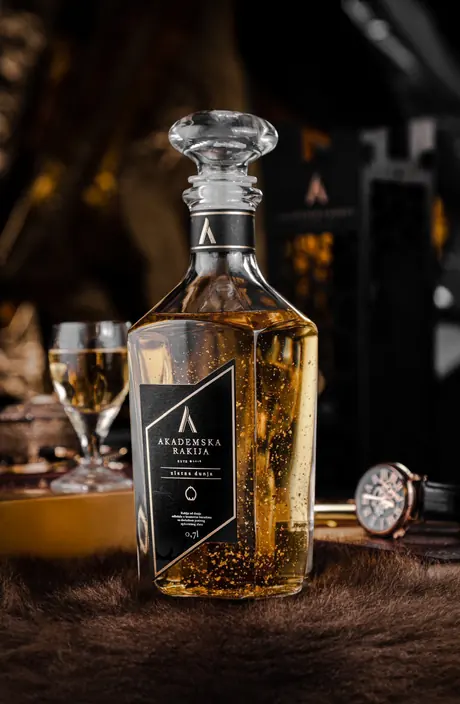
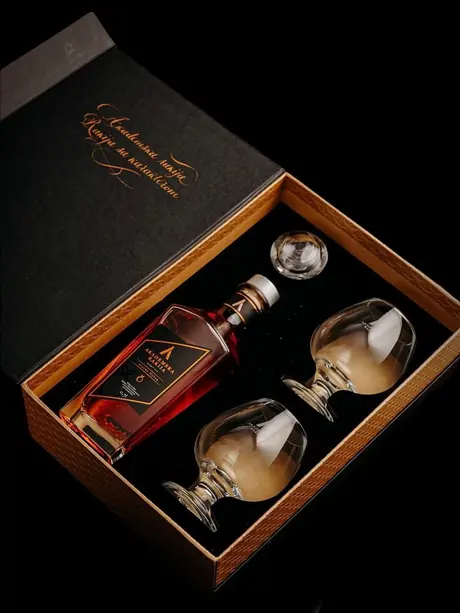
Akademska rakija
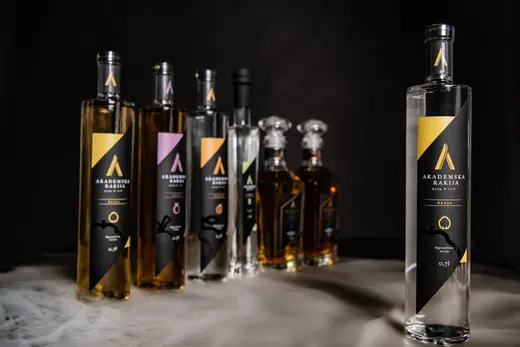
A love of tradition and of rakija brought two friends from university even closer. Following the recipes of the old village households, they decided to turn that love into a drink for their colleagues and for themselves.
Making it the way homemade rakija has always been made, they distilled their first quince rakija. They did not stop there: urged on by friends who loved it, they began making rakija from other fruit. As the range of flavours grew and the technique improved, only a name was missing, and since the idea was born in their student days, the name offered itself: Akademska rakija.