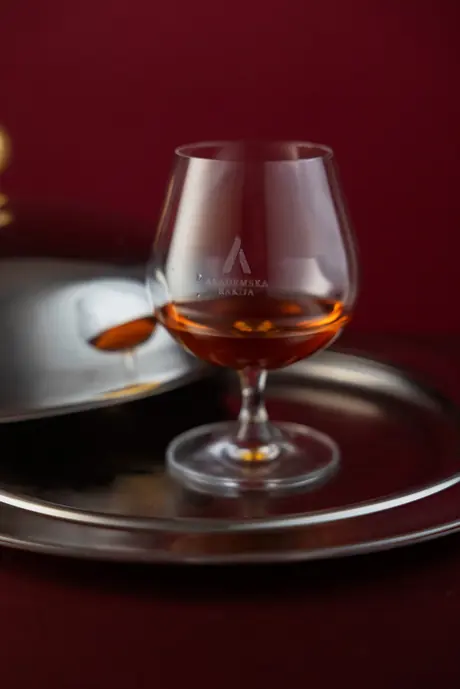
Healing with rakija is passed down from generation to generation. You have surely heard from grandparents and relatives about taking one first thing every morning “for better health”. “Take a sip of rakija and you will feel better!” still rings in our ears. Myth or truth?
Serbs are known to swear by rakija against flu, for circulation and for relaxing. Before modern anaesthetics, alcohol was the only painkiller available among all European peoples, not only Serbs; here, before any medical procedure, men were given up to a litre of rakija to drink and women two thirds of a litre.
It was also common to give rakija to women in labour to ease the pain, hence the popular saying “drunk as a mother”. In pioneering surgery rakija was used not only as an anaesthetic but to disinfect instruments and even organs: with wounds to the intestines, common in wartime, the intestines were taken out by well-washed hands and rinsed with rakija. In areas where tuberculosis took several members of a household, a bottle of rakija was buried with the dead; after 40 days it was dug up and everyone in the house drank a glass, believing in its miraculous power.
“When health is lost, rakija brings it back”
They say rakija is often more effective than tea. Today people are saturated with synthetic medicines, with warnings of side effects, allergies and sensitivities, and doctors often suggest natural remedies first: rest, a change of diet, herbal teas and tinctures, and only then antibiotics. Where does rakija come in?
Rakija as a remedy
Alcohol is a very good solvent and has long been used in medicine, above all in pharmacy, as a base for solutions, extracts and compresses, and for disinfection. Combined with herbs it becomes serious science, since plants give us both poison and cure. Active substances dissolve better in alcohol than in water, some only in alcohol, boiling tea can destroy them, and alcoholic solutions keep far longer.

Here are some of our ancestors’ household practices with rakija.
Sore throat and fever
For a sore throat, the famous rakija compresses: cotton cloths dipped in slightly warmed rakija, wrapped around the chest or neck. For a headache, compresses on the forehead. For fever, socks soaked in rakija and put on.
Earache
The first run of the redistillation, the heads, is harmful to drink but was kept in village houses for medical use: with up to 80% alcohol, a few drops were put in the ear to ease earache. Strong rakija with a few leaves of houseleek steeped in it served the same purpose.
Kidney inflammation
Morning and evening, the back, the flanks, the kidney area and the lower belly were rubbed with a lukewarm mixture of olive oil and rakija.
Bladder inflammation
The flanks and the area below the navel were massaged hard with rakija, rubbed in until it evaporated, then wrapped in a linen or cotton cloth.
Rheumatoid arthritis
Two or three spoonfuls of juniper berries were covered with half a litre of good grape-pomace rakija in a tightly closed bottle, left in a warm place for four days, strained, and the liquid massaged well into the painful spot.
You surely know these stories; they have been part of our tradition for generations, and we all have rakija at home. And so we still hold that, every morning on an empty stomach, one Akademska rakija is worth its weight in gold! Uzdravlje!