Most people pour rakija into a small glass straight from the freezer and drink it in one gulp. Nothing unusual about that; it is how we are used to it. But with a good fruit rakija, made from carefully chosen fruit and matured for years, that is a shame.
Just as good wine or whisky has its way of being served, so does rakija. Not because of strict rules, but because that is how you taste everything the distiller wanted to put into the bottle. Here is how to get the most out of every glass.
It starts with the right temperature
First rule: do not keep rakija in the freezer. This is probably the biggest myth about rakija. Many think it is best ice-cold; it is the opposite. Too cold, its aromas “fall asleep”: instead of fruit, flowers or wood, you mostly taste cold and alcohol. Think of a tomato straight from the fridge, and the same tomato after ten minutes at room temperature. Not the same, is it? Rakija is no different.
What temperature?
There is no single rule for every rakija. Young fruit rakijas, from pear, apricot or quince, are best lightly chilled, about 10–14 °C: pleasantly fresh but never icy, which is when you smell the fruit best. Older šljivovica or any rakija matured for years in a cask is best at about 18–20 °C, where all the aromas people love in aged rakija come through: vanilla, honey, caramel, dried fruit, chocolate and gentle oak.
Does the fruit matter?
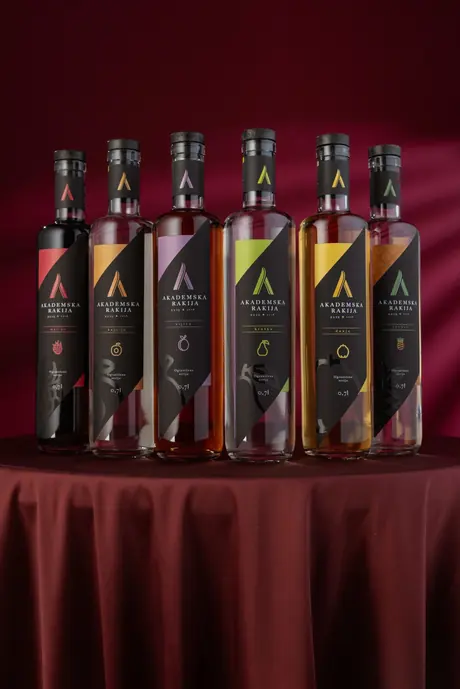
It does. Every fruit has its own character: pear is delicate and floral, apricot sweet and full of fruit, quince intense and unmistakable, and plum, especially after a few years in oak, develops a far more complex taste and aroma. So not every rakija is served the same way.
Which glass?
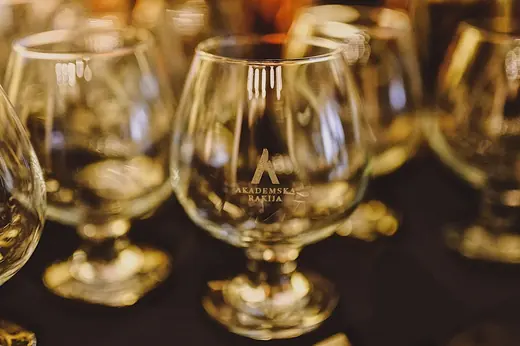
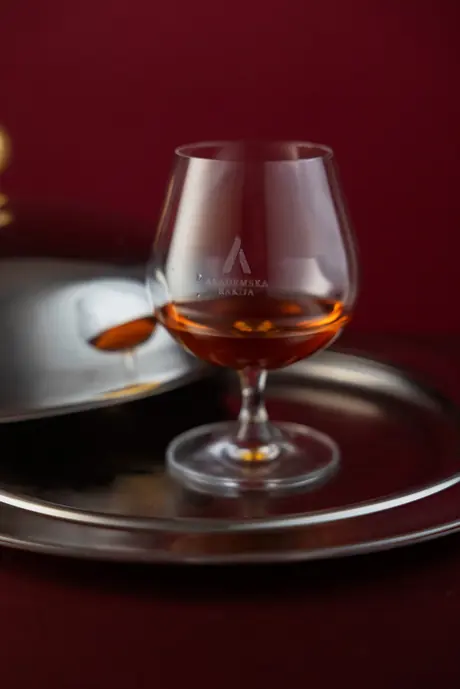
Ask most people and they will say: a čokanj. Nothing wrong with that, but if you really want to taste what you are drinking, there is a better choice: a glass wider at the bottom and gently narrowed at the top, the tulip glass, named for its likeness to the flower.
The wider part gives the aromas room to develop, and the narrower top leads them straight to the nose. Aromas are released as rakija meets oxygen, so the space in the glass matters: the bigger it is, the faster they open, and the narrowing top concentrates them so you can smell them better. If you have ever drunk wine from a wine glass and from a tumbler, you know how big the difference can be.
Do not fill the glass
Rakija is not juice. A third of a glass is enough, leaving room for the aromas you will notice first.
What a real tasting looks like
Do not worry, you do not need to be a sommelier. A minute is enough.
1. Look at it
A young rakija should be perfectly clear; one matured in a cask shows a beautiful gold or amber colour. The first look already hints at what is coming.
2. Smell it
Do not breathe in deeply straight away; bring the glass slowly to your nose. A good rakija should smell of fruit first: pear rakija of ripe pear, quince rakija of quince, apricot rakija of apricot. Older rakijas add vanilla, honey, dried fruit or wood. If all you smell is strong alcohol, that is not a good sign.
3. The first sip
Do not swallow at once; let the rakija stay in your mouth for a few seconds and notice how the taste changes: fruit first, then fullness, and finally a pleasant warmth. In a good rakija the alcohol should not “burn” but sit well with everything else.
4. Notice what stays
This is the finish. With a good rakija the taste lingers: if pleasant fruit or wood notes are still there ten or twenty seconds after the sip, you are drinking a seriously good rakija.
Should you swirl it?
You can: swirl the glass gently once or twice, and after a few seconds even more aromas appear, especially in aged rakija.
Should you wait before the first sip?
Yes. Leave it a minute or two after pouring. Like wine, rakija opens slowly in contact with air, and the second smell is often lovelier than the first.
What goes best with rakija?
Food that will not cover its taste. Excellent choices are:
- hard cheeses
- pršut and other good cured meats
- walnuts and almonds
- dark chocolate (especially with aged rakija)
- fresh fruit
The most common mistakes
- Keeping it in the freezer.
- Drinking it in one go.
- Using the smallest possible glass if you want to smell it.
- Pouring a full glass.
- Hurrying.
Slow down and give rakija one more minute, and you will realise how much you were missing.
Rakija is not a drink to rush
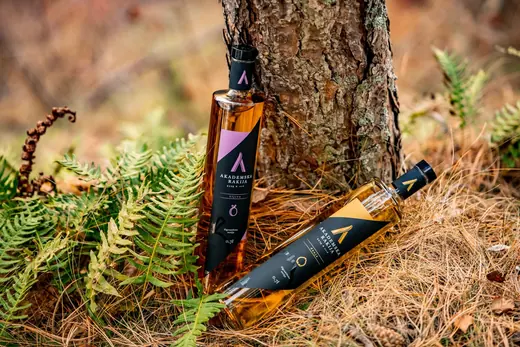
Every good rakija hides a story: the orchard where the fruit was picked, the distillation, the years in the cask or the steel tank. It deserves a little attention, not because you “must”, but because only then do you taste what makes a fine rakija so much more than an ordinary drink.
Next time you open a bottle, do not hurry. Pour it into the right glass, let it open, smell it, and only then take the first sip. Chances are you will meet rakija properly for the first time.