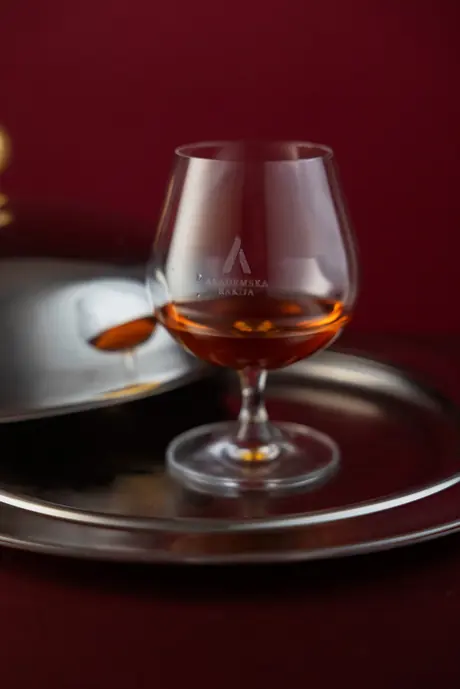
After aroma comes the most important part of tasting: taste. This time we want to bring the flavours of our rakija a little closer.
Before we begin, relax, take a good sip of rakija, hold it in your mouth for a few seconds and swallow. You will feel its texture, which can range from thin to medium to full, dominant and opulent.
The first sip
One sip tells us a lot. At the first meeting it becomes clear whether the aroma matches the taste and they form a whole, or the rakija is out of balance; whether it is smooth or harsh, oily or watery, tart or neutral. With the second sip we can tell harmonious, rounded rakijas from unbalanced ones, and say exactly what we like about a particular rakija. Tasting reveals not only basic tastes but their combinations, and hundreds of aromas and nuances: always an adventure for the senses.
Fruit rakija
The range of aromas is most obvious in aged plum rakija. Šljivovica is the most layered drink among rakijas and among the world’s best for the presence of aromas; aged quince rakija has an exciting aromatic make-up too.
The rakija being tasted should not be above 46% alcohol: stronger, it numbs the tongue and blurs the tastes. Some aromas come at the start, the main ones a few dozen seconds after the sip, and some at the very end.
In šljivovica, the flavours can come from the plum variety, the land where it grew, the way it was distilled, the way it was matured and the wood of the cask.

The aromas that develop in šljivovica during distillation and ageing fall into eight main groups
- Floral: found in well-distilled rakija from plums grown at higher altitude, especially aged prepečenica from newer and imported varieties such as Stanley and Čačanska rodna. Sometimes they give šljivovica a lovely, almost mysterious character; our technologist taught us that linalool is behind them.
- Fruity: šljivovica from native varieties, especially Požegača and Crvena ranka, aged longer in oak, develops exciting notes of dried fruit, raisins, dried apricots and prunes, and particularly pleasant aromas of dates and figs. The moment of picking matters too.
- Vegetal: named for the green notes of grass, shrubs, nettles and green vegetables, pleasant or unpleasant, often found in rakija from fruit that was still green. The group also includes wood, resin and conifer, which develops beautifully in a full glass of old rakija and always signals a fine spirit.
- Spicy: aromas that recall various spices almost always signal a high-quality spirit. They come from years of ageing in mulberry or oak and show that the spirit was strong when it was laid down to rest.
- Roasted and nutty: a rakija with a nutty identity recalls almond, walnut, malt and coffee. Most are dryish, tasted mostly on the tip of the tongue; calm, usually very tasty, and they invite the next sip.
- Fatty: these usually come from a mistake in making the rakija. Rancid butter, fat and unpleasant acids should not appear; if they do, it is butyric spoilage and poor handling of the mash.
- Unwanted: a smell and taste of plum stones can cover all the other, pleasant aromas; mould and mustiness come from very rotten fruit or mouldy vats; a burnt taste comes from mash catching in the still; tail oils show when part of the third fraction gets into the rakija. To prevent them, the whole process must be careful and expert: spotless vessels, a clean and sound still, and rakija kept where it cannot touch dirt.
- Basic tastes: in the end we can always return to the basic tastes to describe a rakija: salty, sweet, sour, bitter and umami.