Ancient Egypt and ancient Greece
The oldest written records credit the discovery of distillation, and of strong spirits, to the ancient Egyptians. It is thought, though, that they did not yet distil wine: their stills were used on aromatic herbs, for perfumes and for the oils used to embalm the pharaohs.
The word alcohol itself probably has Arabic roots, in al-kohol or al-kuhul, once the name of a fine powder women used as make-up. Greek philosophers and physicians, Aristotle, Hippocrates, Galen, Pliny, Dioscorides and others, wrote about distillation before the Common Era.
In Asia spirits were made, and drunk, much earlier than in Europe. Huber records that Mongol nomads living north of the Gobi knew how to distil alcoholic liquids as early as the 8th century. According to Marco Polo (1297) and the French missionary Rubruck, they fermented mare’s milk in leather skins into the “wine” koumiss, and distilled it into an intoxicating spirit, karakumis.
The first stills
By the way the vapours travel from the heated raw material, the oldest stills fall into three types: descending, ascending and lateral. In descending stills the heat came from above, and the products sank below the raw material, where they condensed and cooled. In ascending stills the heat came from below and the vapours rose and condensed. Lateral stills were heated in the same way, but the vapours went sideways to condense in a separate vessel kept cold or cooled with water.
Records from the 5th century say that the old Slavs drank medovača and mead, and brought the habit with them to the Balkans in the 7th century. Nobody knows exactly when rakija-making began here, but it existed in the time of Tsar Dušan.
Production and drinking of rakija and other spirits grew noticeably from the second half of the 16th century, when the first kafanas opened. Until the end of the 19th century stills were very simple; then knowledge from the West, especially Austria-Hungary and France, slowly arrived and stills were modernised. Until the Second World War simple and more modern stills were used side by side; after it, stills were made mostly of copper.
Why we crossed rakija with gold
History has always intrigued us. As we grew older and discovered our love of rakija, we began to read and research, and learned a lot about the history and making of strong spirits, rakija among them. Then we wanted to make our own: a unique, true, homemade rakija.
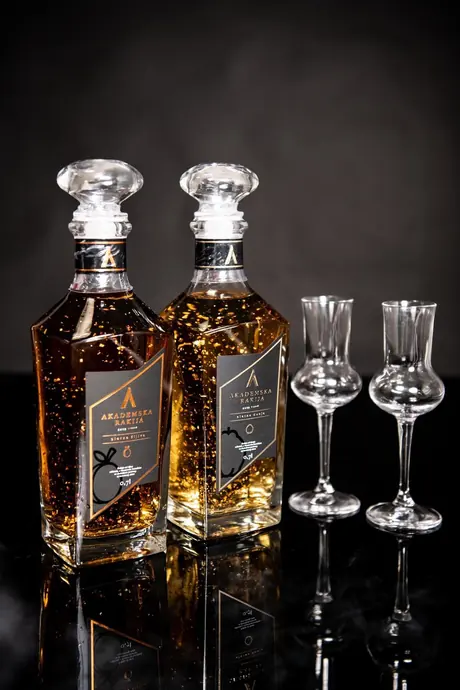
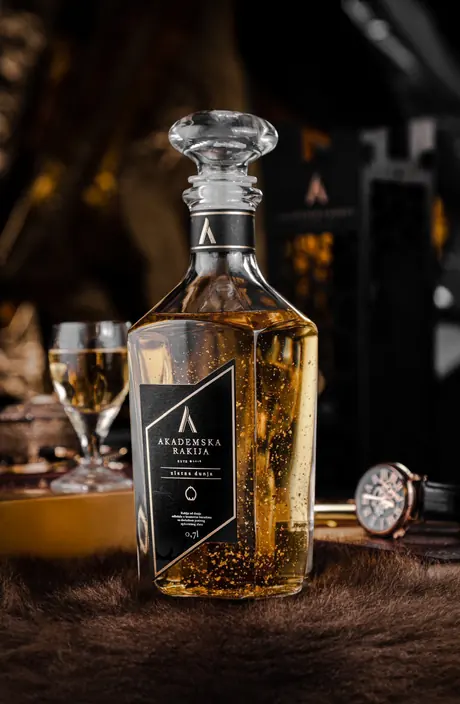
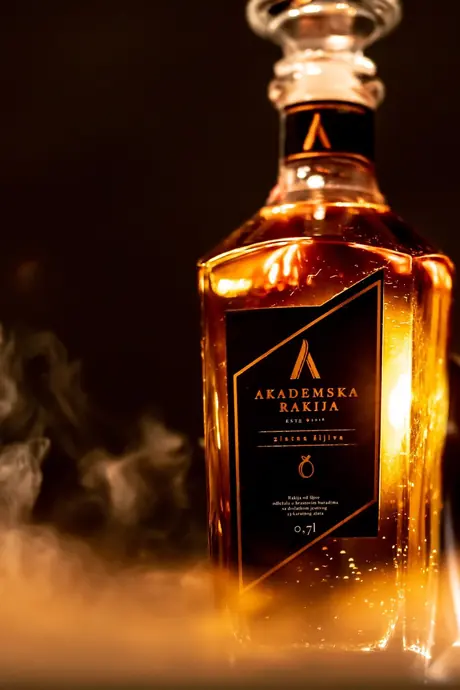
We wanted it to have “that something” that sets it apart from a crowd of identical rakijas, so we made Akademska rakija with gold. We wanted a premium product that would make every sip of Zlatna dunja or Zlatna šljiva feel like a rakija fit for kings.
And, to be honest, we borrowed the idea a little from the Egyptian pharaohs, who adored gold and were even buried with great wealth in it. We do not think they would mind.