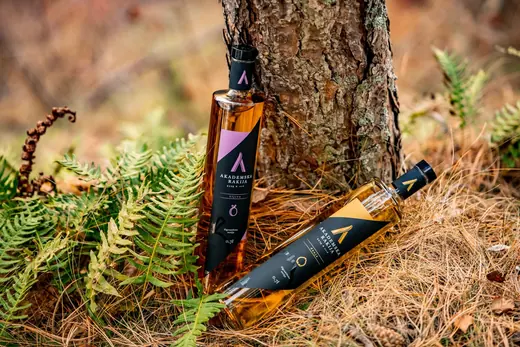
In much of Serbia the traditional way of making rakija is irreplaceable, but it often brings faults that get fixed, as they say, along the way. They can be noticed by taste, by smell or by sight. Here are the most common ones.
Every fault comes from a few sources: the choice and quality of the fruit, the fermentation, the way of distilling, too strong a fire, or poor maturing. Such faults are not “incurable”, but there is a good chance the rakija loses its aroma wholly or partly.
The most common faults are:
- Cloudy rakija
- A smell and taste of rancid butter
- Sour rakija
- Burnt rakija
- Bitter rakija
- A smell and taste of stones
- Acrolein spoilage
What causes them, and the fixes
The most common fault is cloudy rakija. It happens when the rakija is brought down to drinking strength with water that is not soft enough, or with ordinary water: insoluble salts form and show as a white sediment or white flakes. It is fixed by cold stabilisation: the rakija is chilled, almost “frozen”, and then filtered.
Sour rakija appears most often with small producers, when the fermented mash turns sour through acetic acid bacteria. To avoid it, the vessels holding the mash must be well closed, so that the alcohol does not escape and vinegar flies, which carry the bacteria on their legs, cannot get in. It is worse if the mash is forgotten and left for weeks after fermentation has ended. Moderately sour rakija can be treated with magnesium oxide.
A rancid smell and taste come when fermentation runs at high temperatures and the mash has low acidity: bacteria that cause butyric spoilage can then multiply. Such rakija can be “repaired” with slaked lime and a further distillation.
A smell and taste of stones occurs in stone-fruit rakija when stones are broken during processing. This need not lead to an unwanted taste; it depends on the enzymes in the fruit.
Bitterness comes from processing fruit with its stalks or leaves, and can be removed with activated charcoal.
A burnt smell and taste, as the name says, comes from thick mash catching on the bottom during distillation. A special resin that binds aromas and flavours can improve such rakija, but at the cost of its aroma.
Acrolein spoilage comes mainly from a poor choice of fruit: fruit gathered dirty from the ground carries the bacteria behind it. To avoid it, dirty fruit must be washed well before processing.