Sensory evaluation is a subject we have wanted to write about for a while. We will not go too deep: just the basics of this analysis and why it matters.
The word quality comes from the Latin qualitas, a property or characteristic. The quality of a spirit is a very complex idea: besides its chemical make-up, its sensory characteristics are given the greatest weight.
The basics
Defining the quality of a spirit draws on the latest knowledge of instrumental and sensory analysis. Determining it, let alone expressing it as a number, is extremely hard, because quality is complex and many-layered. The overall quality is the sum of individual qualities, and knowing and measuring each of them precisely is the only right way to a final score.
Colour
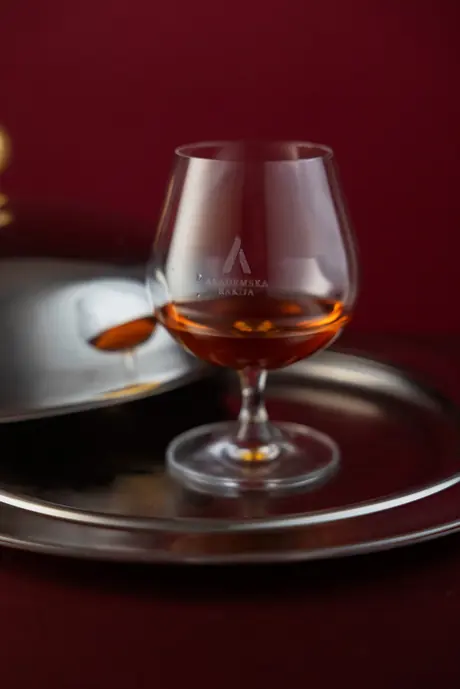
A basic quality parameter. Colour tells us whether the rakija has matured for a time in a wooden vessel. Together with clarity it gives the first impression of quality, and for professionals it plays a big role. Colour is judged against a white background.
Clarity
One of the most basic sensory parameters, closely tied to purity and to colour. Clarity is what gives us the visual picture of the rakija, and decides whether we like that picture.
Typicity
A newer parameter, introduced about ten years ago to separate the specific, characteristic properties of particular categories of spirits, given the different processes used to make them.
Aroma
Put simply: if something does not smell good, it often is not good. Aroma is one of the most important parameters and directly affects the score. Aromas fall into four groups by origin and the time they form: primary, secondary, tertiary and quaternary.
Taste
The most important parameter, with the greatest effect on the score. Because it is so complex, it is approached very seriously, with the most precise terms used to describe it.
The results of sensory analysis, together with laboratory results, allow a final judgement on the quality of a spirit.
In Serbia the points for each factor are added up, to a maximum of 20, and points translate into medals as follows:
- Grand gold medal: samples scored 18.50 to 20 points
- Gold medal: samples scored 18.01 to 18.49 points
- Silver medal: samples scored 16.01 to 18.00 points
- Bronze medal: samples scored 14.01 to 16.00 points