Making good, high-quality and above all tasty fruit rakija is not simple. Ripe, soft and sound fruit is crucial, and every technological step and parameter has to be respected. Apricot rakijas have some of the finest aromas of all and a particular softness.
They are made from stoned, fermented fruit distilled in a copper still, and their unusual aroma awakens all the senses.
How apricot rakija is made
It starts with picking ripe or even overripe apricots. Then comes crushing and removing the stones, then alcoholic fermentation in closed vessels, the most important stage for the aroma, then distillation of the fermented mash, and finally maturing and finishing the rakija.
In Serbia apricot rakija is made from the Kečkemetska ruža and Mađarska najbolja varieties, mostly in Vojvodina. Mađarska najbolja ripens at the beginning of July; fully ripe, its skin turns deep yellow with touches of red and the flesh dark orange, soft and very aromatic. Apricot rakija should have between 40% and 42% alcohol: at that strength it shows all its richness, its full taste and its aroma, and stays easy to drink.
The process, step by step
The time of harvest matters a great deal. Apricots should be picked fully ripe or a shade overripe: overripe apricots hold the ideal amount of sugar and a pronounced aroma, which is why rakija from them is among the finest.
The fruit is crushed as needed, partly under its own weight in the fermentation vessels. It is good practice to remove the stones completely, or at least partly; if not, the fermented mash should be distilled as soon as possible, so that the stones do not release too much of the compounds that smell of bitter almond. In our production we use a pulper, a machine that turns the apricots into a purée and throws out the stones so that they cannot spoil the mash. Fermentation should take place in closed vessels, to keep the aroma and alcohol in and stop higher acids forming in the rakija.
Sulphurous acid is added to the apricot mash to stop harmful micro-organisms that would create bad-smelling substances during fermentation, which pass into the rakija during distillation. When fermentation is over, the mash should be distilled as soon as possible, because quality falls the longer it stands.
The Akademska apricot
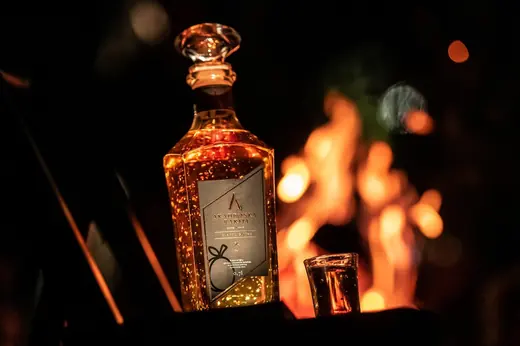
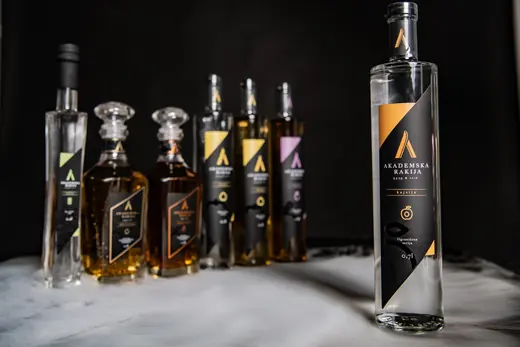
Akademska kajsija is easiest to recognise by its wonderful scent and very fine aroma. It is a blend of Mađarska najbolja and Kečkemetska ruža apricots.
A natural rakija of 100% apricot, with no natural or artificial additions that would change its aroma and taste, distilled twice. It has a gentle, fresh scent and taste of apricot, and is a favourite among lovers of fruit rakija.